



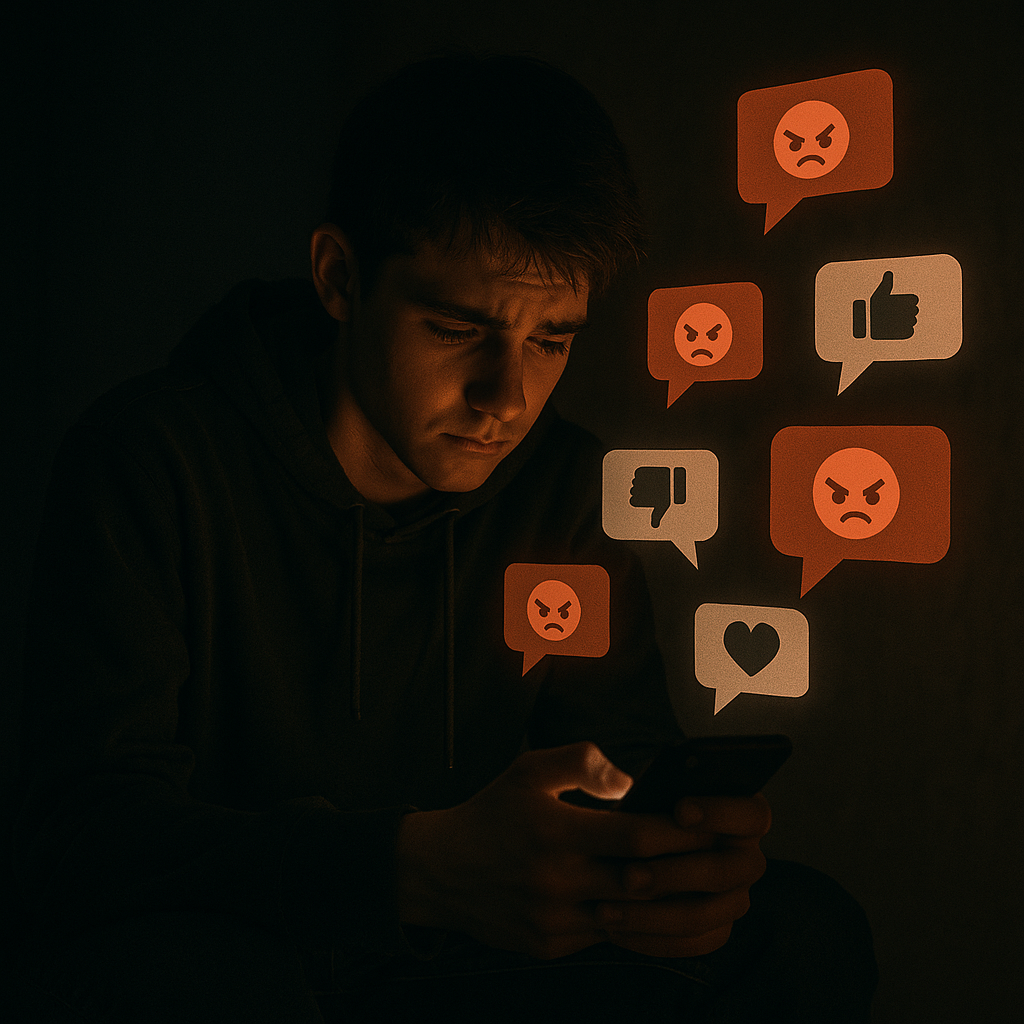
Facebook, Instagram, TikTok, YouTube and the like - social media have long since become an integral part of our everyday lives. For young people in particular - the so-called „digital natives“ - it is completely normal to be online around the clock: posting, liking, commenting and sharing are part of everyday life. While the use of digital platforms is an enrichment for many, legal risks are often overlooked.
From a legal perspective in particular, it is remarkable how the handling of personal data and images has changed in recent decades. As recently as 1983, the Federal Constitutional Court formulated the fundamental right to informational self-determination in its legendary census judgement - a principle that is more relevant today than ever. Nevertheless, in 2025, private data is often handled carelessly: selfies, stories, screenshots - and not just of oneself, but often of other people too - are shared without much hesitation. But this is precisely where the Internet criminal law an: Where personal freedom ends and legal boundaries are exceeded, criminal offences can be committed.
Especially in a big city like Bremen, The internet, which is known for its open and networked lifestyle, is a constant source of cyberbullying, insults, data misuse and unauthorised image sharing. The internet is not a legal vacuum - even if many users still seem to believe this.
1. insult on the internet (§ 185 StGB): What is prohibited offline is not permitted online
Hate comments, disrespectful remarks and digital hate speech: social networks such as Facebook or X (formerly Twitter) provide a platform on which some users can get carried away with particularly abusive behaviour. The supposed anonymity of the internet lowers the inhibition threshold - but the following also applies online: if you offend, you are liable to prosecution.
The offence of insult (§ 185 StGB) protects personal honour. Even a short comment under a post can constitute a criminal offence - it does not always have to be a drastic insult. Even comparatively mild terms can be punishable if they violate the dignity of the person concerned. Of course, this also applies to wording in emails, WhatsApp messages or online reviews. The penalty ranges from a fine to one year's imprisonment - and even more in the case of public insult.
2. defamation and libel (§§ 186, 187 StGB): When rumours become a criminal offence
A typical example from everyday working life in Bremen: In a WhatsApp group, a colleague claims that another colleague is lazy and regularly arrives late. Sounds harmless? It's not necessarily. Such statements can quickly be interpreted as defamation (§ 186 StGB) are to be categorised as "criminal" - especially if they are made to third parties and damage the reputation of the person concerned.
If the statement goes even one step further - and the author knows that the assertion is false - then it is an offence. Defamation (§ 187 StGB) before. Both offences are classed as crimes of honour. The penalty depends on the severity and type of dissemination: If the statement is disseminated publicly, e.g. via social networks or messengers, more severe penalties apply.
Important to know: These offences are so-called Application offences, This means that the person concerned must actively file a criminal complaint within three months - otherwise the offence remains unpunished.
3. the right to one's own image (§§ 22, 23 KunstUrhG): It gets tricky without consent
What is often just a quick snapshot with a smartphone in Bremen's city centre can be legally problematic: The Right to one's own image protects everyone from photos or videos being published or forwarded without consent. Whether at public events, in traffic or at work - anyone who takes pictures of other people and shares the material online should be aware of the legal limits.
Only in exceptional cases - for example in the case of portraits of contemporary history or photographs in which people are merely „accessories“ - is publication permitted without consent. Otherwise, the consent of the person depicted is required. Users who violate this rule are liable to a fine or imprisonment (Section 33 KunstUrhG).
4. section 201a StGB: Protection of privacy from secret recordings
It becomes even more serious when photos or videos are taken and shared in particularly sensitive situations. The offence of Violation of the highly personal sphere of life through image recordings (§ 201a StGB) includes, among other things, secretly recorded or exposing content - for example of drunks, injured people or even nude images that are distributed without consent („revenge porn“).
In Bremen, there have been repeated investigations into precisely such cases in recent years - mostly involving young perpetrators and victims. Even if those affected are initially reluctant to take legal action: The legal options exist - and the law enforcement authorities are taking such incidents increasingly seriously.
Conclusion: Internet criminal law is more than a marginal issue
Whether it's insults in comment columns, defamation of character in group chats or secret video recordings - the internet has changed the rules of the game, but the laws still apply. Especially in a networked city like Bremen shows how important legal clarification and consistent criminal prosecution are in the digital space.
Internet criminal law is not a niche topic, but a highly topical field with many references to our everyday lives. If you have the feeling that you have been treated unfairly or even criminally attacked online - or are yourself confronted with the accusation of a criminal offence - early legal advice is essential.
As an experienced law firm in the field of criminal law - also with a special focus on Internet criminal law - we provide you with competent and confidential support in all legal matters relating to online offences. We are available to you at our offices in Sulingen, Bremen, Osnabrück or online.
FAQs on the topic of Internet criminal law
1 What is meant by Internet criminal law?
Internet criminal law covers all criminal offences committed online - from insults and copyright infringements to cyberbullying.
2 What should I do if I have been insulted on the Internet?
Secure evidence (e.g. screenshots) and file a criminal complaint as quickly as possible - preferably after consulting a lawyer.
3. is it a criminal offence to share someone else's photo without permission?
Yes, without the consent of the person depicted this may constitute an offence under the Art Copyright Act or Section 201a StGB.
4. does criminal law also apply to WhatsApp groups or private messages?
Yes, criminal insults, defamation or image offences can also occur there - the Internet is not a legal vacuum.
5 How long do I have to file a complaint?
In the case of most internet offences (e.g. insults), those affected have 3 months to file a criminal complaint (Section 77b StGB).




 German
  English
  Spanish
  Persian