



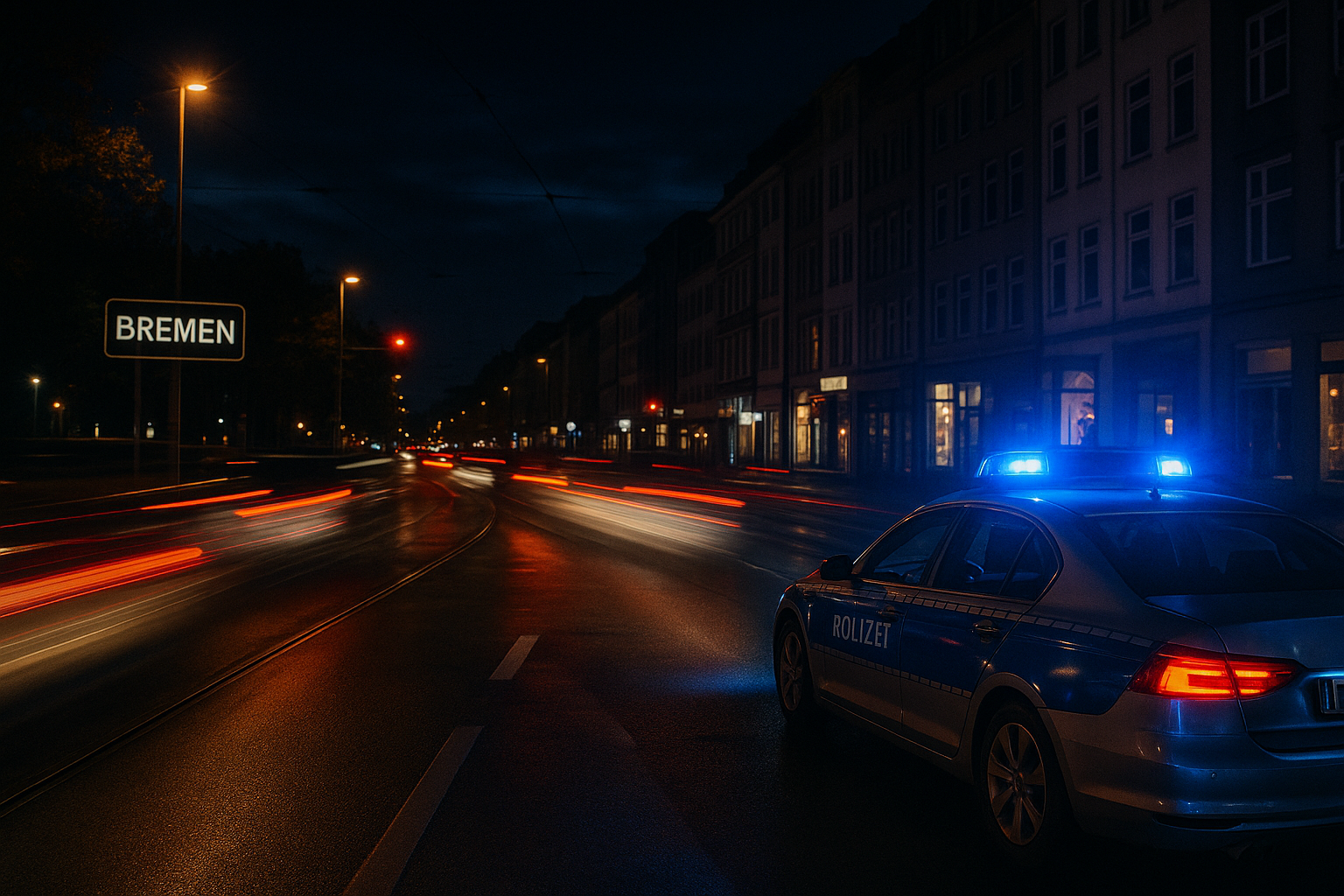
Anyone who drives a car in Bremen every day knows that things can quickly get hectic in heavy city traffic or on busy arterial roads. A brief moment of carelessness - and you can end up in situations that are not only expensive, but can also be a criminal offence. This is exactly where the Traffic offence law on. It protects all road users from grossly negligent or even deliberate behaviour - and provides for sometimes drastic consequences in the event of violations.
In this article, we provide an overview of which offences are punishable in road traffic, what the legal basis is, what suspects can expect in Bremen and how traffic offences can be prevented.
1. what exactly does criminal traffic law cover?
Criminal traffic law is an independent area within criminal law that focuses on criminal offences in road traffic. In contrast to misdemeanours such as parking offences or minor speeding offences, these are types of behaviour that are punishable by law. jeopardise the safety of others or cause considerable damage can.
In practice, this often affects road users who drive under the influence of alcohol or drugs, commit hit-and-run offences or take part in illegal car races - all of which are not isolated cases, even in Bremen's urban area.
2. the most important legal regulations
The legal basis of traffic offence law is primarily formed by the Criminal Code (StGB). It is complemented by the Road Traffic Act (StVG). Some particularly relevant paragraphs are:
§ Section 315c StGB - Endangering road traffic
Anyone who acts recklessly and thereby endangers the life or limb of others, for example by driving through a red light under the influence of alcohol, is liable to prosecution.§ Section 316 StGB - Drunk driving
A blood alcohol level of 0.3 or more in conjunction with signs of being under the influence of alcohol can constitute a criminal offence - in Bremen there are regular priority checks.§ Section 142 StGB - Hit and run
Anyone who simply drives away from the scene of an accident risks not only a fine or imprisonment, but also the loss of their driving licence.§ Section 315b StGB - Dangerous interference with road traffic
This includes, for example, deliberately causing an obstacle or tampering with traffic equipment.§ Section 315d StGB - Prohibited motor vehicle racing
Illegal street racing - whether with others or „against the clock“ - is a problem in many large cities. There have also been several high-profile cases in Bremen in recent years.
3. what sanctions and measures are threatened?
Traffic offences not only have legal implications, but often also existential consequences - especially if your job or everyday life relies on your driving licence. The range of sanctions extends from fines to custodial sentences.
Fines and prison sentences
Depending on the offence, substantial fines or even prison sentences of up to five years - or even more in particularly serious cases - can be imposed.Driving bans and driving licence disqualifications
In the case of serious offences, a driving ban of up to three months or even permanent withdrawal of the driving licence is possible. The reinstatement of the licence is often Medical-psychological examination (MPU) bound.Points in Flensburg
Road traffic offences are Driving aptitude register of the Federal Motor Transport Authority documented in Flensburg. If you reach a certain number of points, you may be subject to further measures, including the withdrawal of your driving licence.
Especially in urban areas such as Bremen, where many road users share the same space, situations can quickly arise in which there is a risk of legal consequences - even if no malicious intent was involved.
4th Prevention in Bremen: Road safety begins in the mind
Anyone who not only wants to avoid penalties but also wants to actively contribute to greater road safety should know which preventive measures already exist in Bremen and the surrounding area - and how you can help prevent accidents yourself:
Regular traffic checks
The Bremen police frequently carry out alcohol and drug checks as well as speed measurements - especially at known accident blackspots.Road safety education & information
From primary school to the driving test, road users are prepared for safe behaviour through targeted programmes.Technical aids
Speed cameras, distance measurement systems and modern dashcams not only provide evidence, but also have a preventive effect. In Bremen, the use of such technology is being increasingly expanded.
5 When is legal support useful?
As soon as a preliminary investigation is initiated or a penalty order arrives, legal assistance is urgently recommended. In many cases, penalties can be mitigated or unnecessary proceedings avoided altogether by taking early action. We regularly represent clients from Bremen and the surrounding area in cases relating to criminal traffic law - with sound experience and clear communication.
Conclusion
Criminal traffic law protects us all - but a single moment can be enough to become the focus of the investigating authorities. If you know your rights and act in good time, you can avoid worse.
As a law firm specialising in criminal and traffic law, we are ready to support you in all matters relating to traffic offences and the associated legal challenges. Our expertise ranges from advice and communication with the authorities to representation in court. If you need legal support, you can reach us at our offices in Bremen, Sulingen, Osnabrück or simply online.
FAQs on the subject of criminal traffic law
1. which traffic offences are particularly frequent in Bremen?
In Bremen, drunk driving, hit-and-run accidents and offences against the Narcotics Act in connection with road traffic are particularly common offences.
2 What happens after a traffic offence?
Once the offence has been established, the police initiate an investigation. Depending on the case, an indictment or a penalty order is issued - often combined with driving licence measures.
3. is it worth appealing against a penalty order?
Yes, in many cases a penalty order can be mitigated or completely averted with early legal advice. The objection period is two weeks.
4. can I keep my driving licence after a traffic offence?
This depends on the specific offence. In the case of first-time or less serious offences, there is often no threat of a driving ban - the driving licence is then generally retained.
5. do I have to take an MPU?
After serious offences such as driving under the influence of alcohol or drugs, the driving licence authority can order an MPU (medical-psychological examination) before a new driving licence is issued.


 German
  English
  Spanish
  Persian