



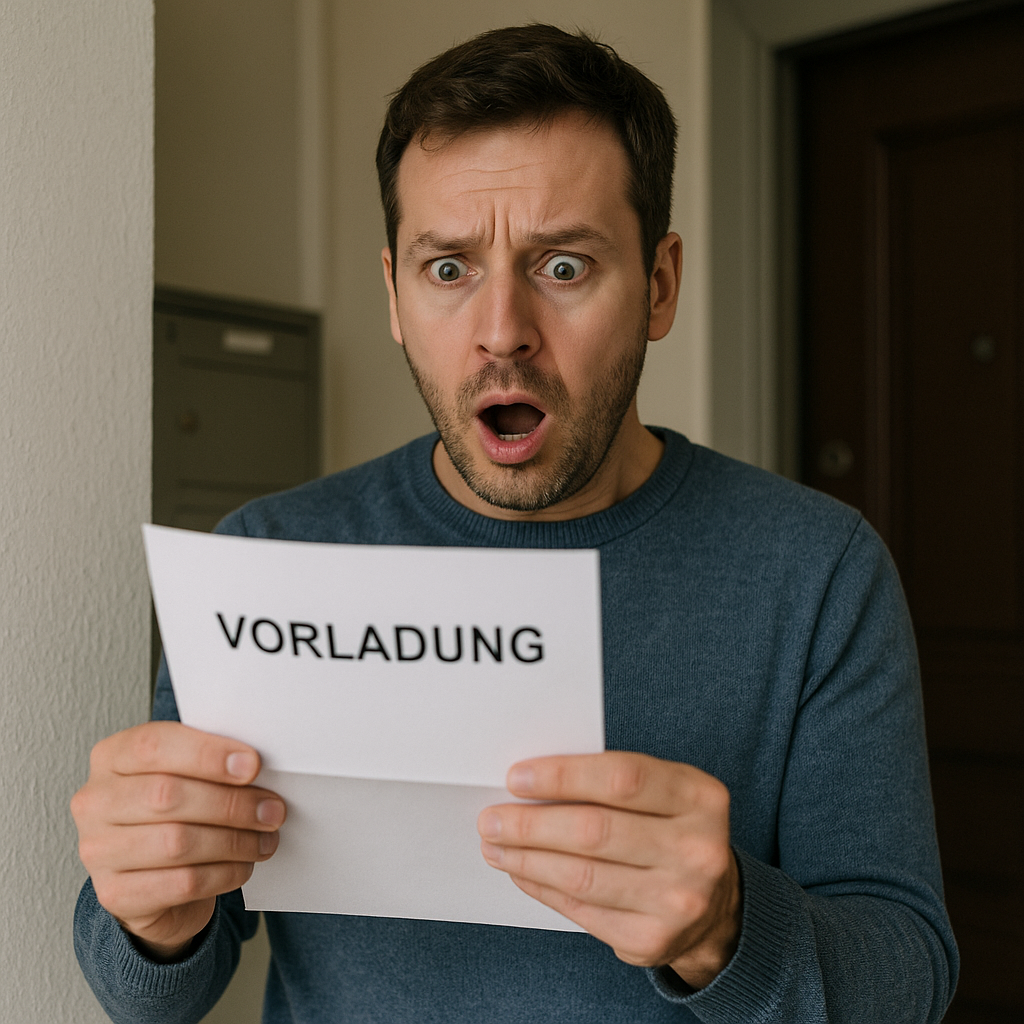
Suddenly the police ring the doorbell and hand over a letter or there is an official envelope in the letterbox. One Summons as defendant:r. For many, this starts a worrying cycle of thoughts: What does this mean for me? Am I now automatically „the guilty party“? And do I even have to go there?
People receive such summonses every day - guilty or innocent. In Bremen in particular, it happens time and again that citizens are summoned by the police as part of ongoing investigations. But don't worry: the mere fact that you receive a summons does not mean that you are guilty. not automatically, that there is sufficient evidence against you.
In this article, we explain what the summons is all about, what rights you have - and what mistakes you should definitely avoid.
1. what is a summons as a defendant?
A summons to appear as a defendant is a official invitation from the police or public prosecutor's office to a hearing. It is sent as part of an investigation if the law enforcement authorities suspect that a criminal offence may have been committed.
Important: A summons is is not synonymous with a display. Sometimes the police rely on anonymous tips or their own observations without anyone having filed a criminal complaint.
In Bremen in particular, for example in the case of incidents in the city centre or in certain districts such as Gröpelingen or Hemelingen, even a trivial matter - e.g. a neighbourhood dispute - can result in a summons. The decisive factor is You are not obliged to accept this invitation.
2. do I have to appear for the summons?
No. And we also strongly advise against it, to go to the police unprepared - regardless of whether you think you are innocent or not.
As a defendant you must do not go to the police, even if the invitation letter is formulated formally and urgently. The sentence „If you are unable to attend, please let me know...“ seems like an obligation to many people - but it is not. You do not have to turn up, cancel or give a reason.
Because everything you say can be used against you later. And especially during police interrogations, there is an enormous Information gap. The investigators know the file situation - you do not. Even if you are certain that you have done nothing wrong, there is a risk of inadvertently incriminating yourself or limiting your defence options.
3. received a summons - and now?
The most important rule is: Don't go to the police yourself - and don't say anything. Contact an experienced criminal defence lawyer instead.
At our law firm in Bremen, we take care of communication with the police and public prosecutor's office for you. We will ensure that you have access to the files, examine the allegations and decide together with you whether - and how - it makes sense to make a statement.
Often a written submission After viewing the investigation file, the best way to clear up misunderstandings without unnecessarily incriminating yourself.
4 What if I am summoned as a witness?
The situation is slightly different if you are a Stuff:in be preloaded. The following applies here:
Before Court or at the public prosecutor's office are witnesses as a rule subject to disclosure.
The police are allowed to use only by order of the public prosecutor's office be demonstrated.
Close relatives of the accused may refuse to testify (§ 52 StPO).
If you or your relatives are concerned with your statement could burden themselves, you may also refuse to testify (§ 55 StPO).
In any case: Seek legal advice, before you make any statements. It is not uncommon for witnesses in particular to suddenly become defendants themselves in the course of an investigation.
Conclusion: Silence protects - talking can harm
A police summons is a serious step in the investigation process, but no reason to panic. The decisive factor is, not to do anything hastily. You have the right to remain silent - use it. And get legal help. This will protect your rights - and your future.
FAQs on the subject of summonses
1. do I have to obey a summons as a defendant?
No. As the accused, you are not obliged to appear for police questioning or to make a statement.
2. does it look suspicious if I do not comply with the summons?
No. Silence is your right and must not be judged negatively.
3 What happens if I testify despite my innocence?
Careless statements can make your defence more difficult - even if you are innocent. You should therefore consult a lawyer before making any statement.
4. can I simply make a written statement?
Yes - after inspecting the files, a written statement may be useful. Seek legal advice on this.
5 Does this also apply to stuff?
In part. Witnesses must testify in court, with the police only if ordered to do so by the public prosecutor's office. Relatives and vulnerable persons have the right to refuse to testify.




 German
  English
  Spanish
  Persian